
Why facades?
Building facades are vitally important
You’re probably here because you think your facade is important. We naturally think you’re correct because, among other reasons, facades:

20%

100%

75%

70%
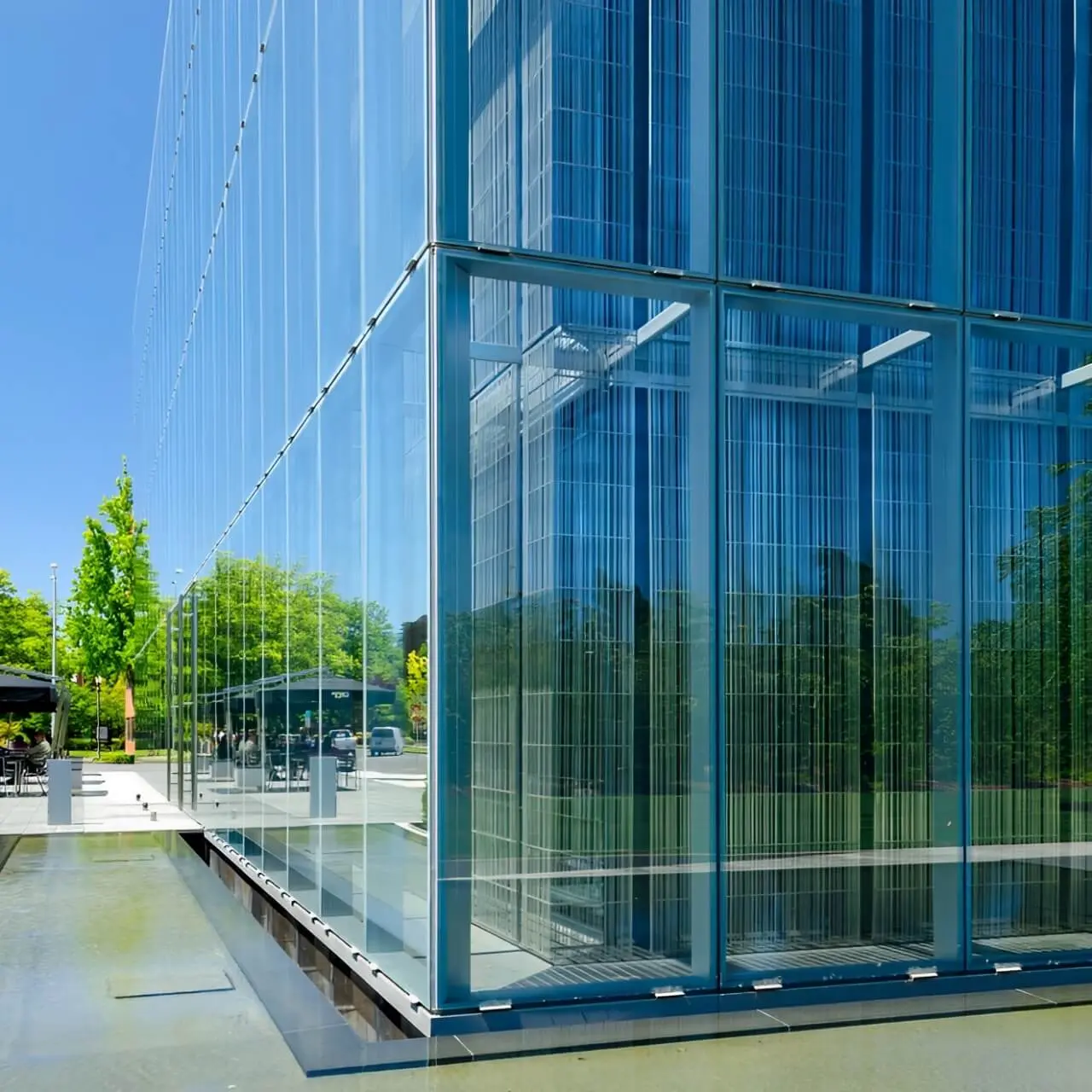
Jaqua Center for Student Athletes at the University of Oregon
Modern facades are intimidatingly complex
The continued high proportion of building defect claims relating to the facade led one commentator to write, ‘It is clear the designers & constructors continue to struggle with the building enclosure’.²
Many of these struggles relate to modern, high-performance facades as they are formidably complicated to design & construct. Such complexity is inevitable but the struggle is not and we are here to help with decades of experience and a process proven to deliver superlative results.
The complexity of the modern facade arises from three sources:
1. Aesthetics
Design excellence optimally balances aesthetics & technical performance. Huge advances in materials technologies, manufactured components, and engineering techniques have greatly widened the architectural facade design palette.
As architects are inherently creative & innovative, they leverage this wider palette to push the boundaries of facade design further and faster.
2. Performance
In addition to providing a beautiful building exterior, the facade is the key interface between the building interior and the exterior world.
To maintain a comfortable and safe space for building occupants, the facade has to keep out adverse elements, facilitate connection to the outdoors, and keep in expensive heating and cooling.
This multifaceted role involves competing but interdependent performance requirements such as:
- Providing adequate thermal control while maximizing daylight, views, and access to fresh air,
- Anchoring the enclosure to the building structure while minimizing thermal bridges,
- Accommodating movements due to thermal, wind and seismic loads while also controlling water penetration and contamination,
- Designing for bird-strike and blast/ballistic impacts,
- Providing appropriate acoustic control, particularly in noisy environments,
- Maximizing cost effectiveness.
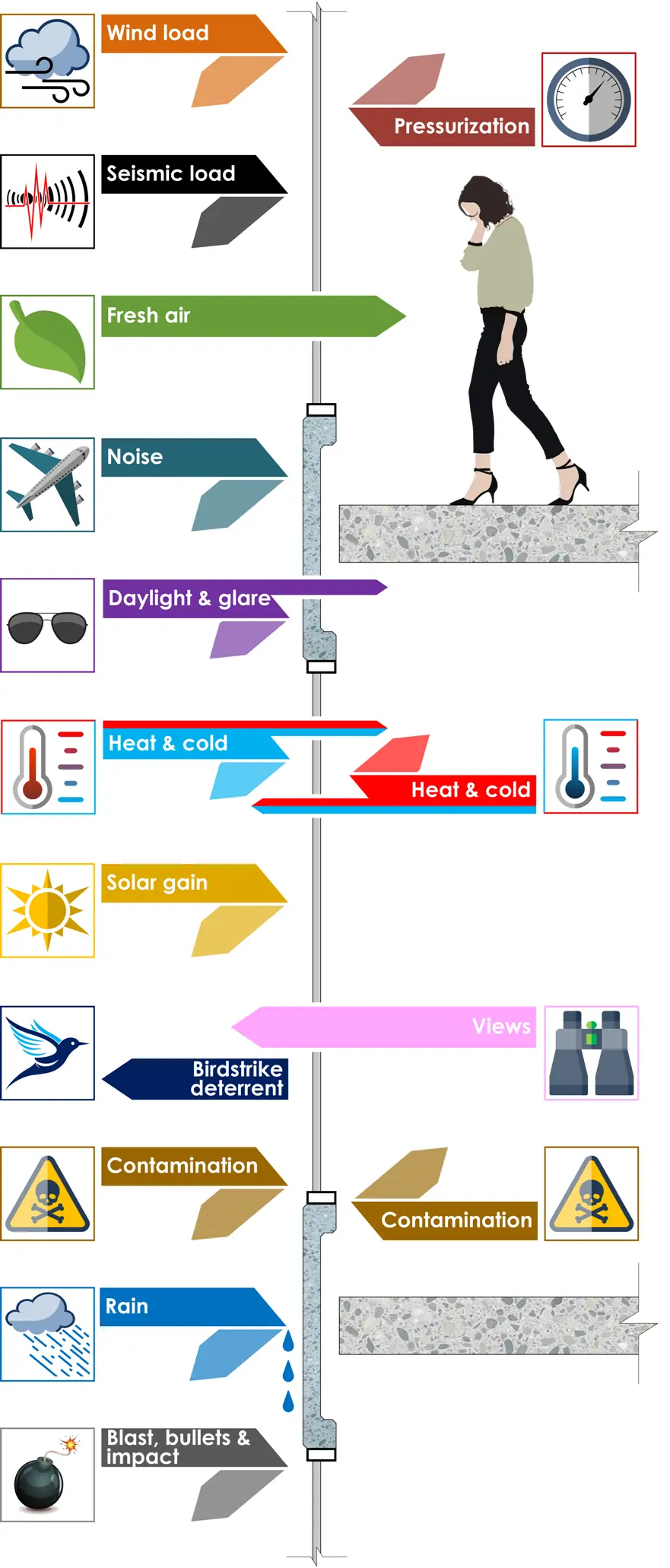 The complex performance demands on a modern facade.
3. Fabrication & construction
Modern facades are also comprised of multiple systems, components, materials, and finishes.
World class performance depends on the correct design and construction of these elements individually and collectively so they work together seamlessly.
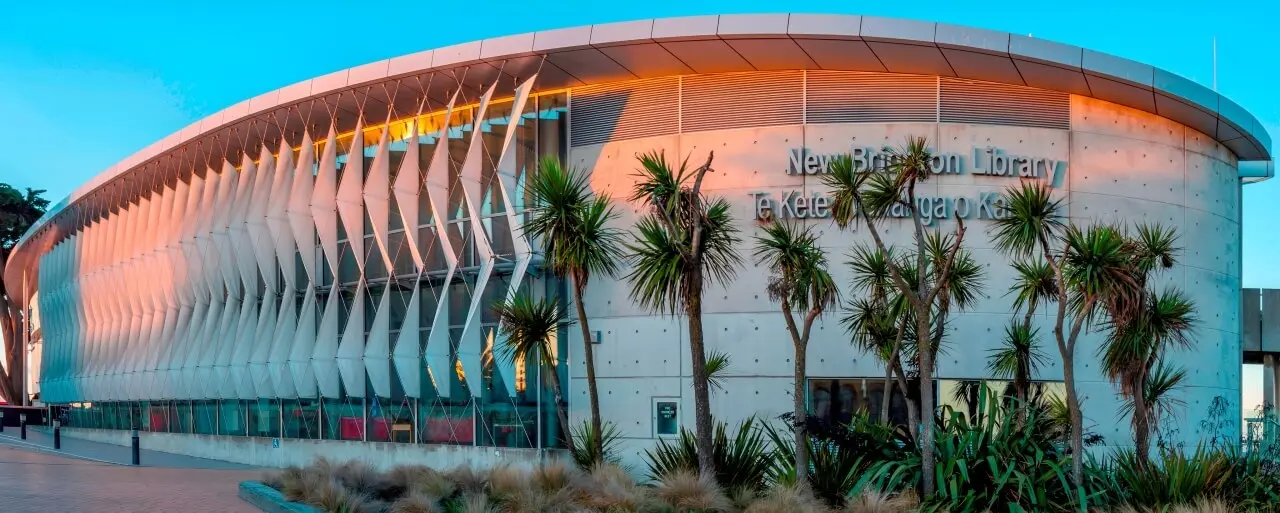
We help owners & architects transcend the complexity of modern facades to achieve world class performance without compromising aesthetics, buildability, or cost effectiveness.
Image credits:
- Jaqua Center: Gary Halvorson (CC BY 4.0)
- New Brighton Library: Michal Klajban (CC BY-SA 4.0)
Notes:
- ‘Preventing Defect Claims in Hot, Humid Climates‘, K. Grosskopf, P. Oppenheim, and T. Brennan, ASHRAE Journal
- ‘Why commission the building enclosure?’ M.D. Parker, The Construction Specifier